Assessment: It was not a great movie, but it was watchable. It had a pretty standard storyline and felt reminiscent of a typical zombie movie. Small town overun by monsters. Ragtag band of heroes survive to tell the tale. Complete with the dumb student-agers, the tough mom/badass female, the rugged man hero, etc.
Ironically, this film was by a different director than the first. The director of the first being THE White-American Resident Evil GUY. The writer/director of all 6 not that great Resident Evil films. Maybe this director(s) took a cue from him.
Epic final scenes of a rainy night escape situation to get to the hospital roof, which always has a helicoptor. A little nod to Arnie when our hero yells, “get to the chopper!”
It was pretty much what you might expect despite the plethora of questions that arise as there was no provided scientist character to translate/interpret the Predator’s motives.
Final scene of the movie leaving it open for more. As they do. This time with the revealing of a mysterious all powerful organization. Much like the conclusion of the Godzilla/King Kong films. Who is this organization? What do they want? Do we even care? If we don’t know by now, maybe we never will.
The air is thick and hot. It settles on you like a thin layer of fabric slowing your movements down. Forwards feels like a goal, like a battle. The sun seems absent yet, somehow always behind you, casting shadows among a scifi shade of orange. Unnatural shade of orange. Smog curtains you in, trees, mountains, distance, all left to foggy memory. The sound of crows rising up from some indeterminable direction. Maybe every direction. And if you squint your eyes a little and strain your ears, you might find yourself in that post apocalyptic existence meant only to be found in the aisles of fiction.
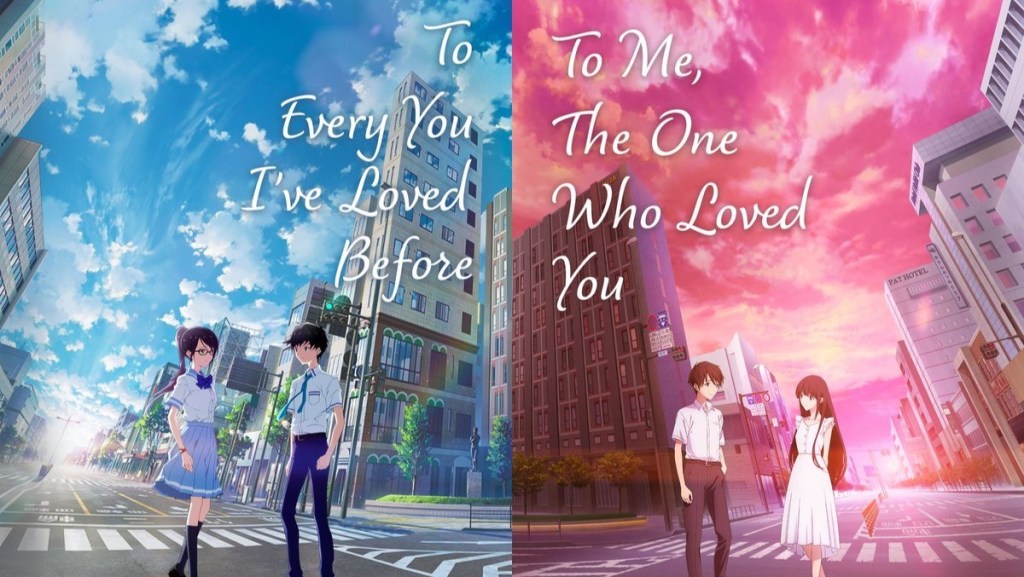
It is about the idea of possibilities. Parallel worlds. They describe it as one bubble splitting in two, circling each other as they ascend towards the same place. The idea has been touched on a number of times. What would my life have been if I had turned right instead of left? Who would I have met and who wouldn’t I have met? These films are separate, but like two bubbles they circle around each other. They present as two possibilites for the same boy. The impact is more in the thought provoking nature rather than illiciting deep feeling. The deeper feeling was sacrificed to make room for the establishment of the science. And while there is debate on which order to watch the films in, there is only one order that makes sense and allows for the story to build on itself. Similar to the way that there is only one order to watch the Star Wars films to gain the most fulfilling experience. In the same vein as Your Name, these films have that “what if” flavor. The desperate and driving need to bend the laws of physics to save someone you love.
I am from my head down to my toes. Have you ever had those moments where your heart just stops? Like the first time you ever heard Dreams by The Cranberries. Or that moment in Fleetwood Mac’s Gypsy when Stevie stops and the guitar takes over. Or the way the sound of a cello is simply a love song to the soul… And even in a crowded theater with a huge bendy screen and immersive “surround sound,” this grabs me by the heart balls with one hand and slaps me upside the head with the other. This. This is a love song to my soul.
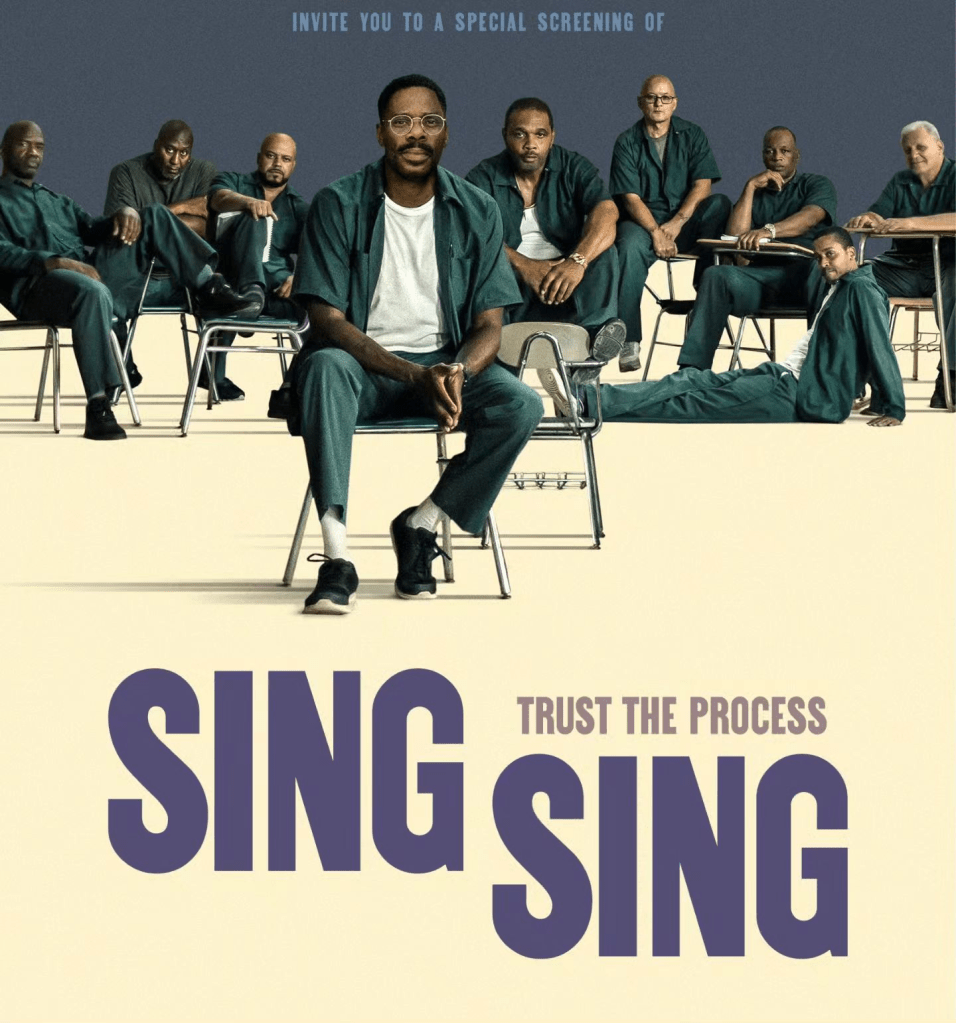
I think a lot about correctional facilities. I think about what Angela Davis said about them being places in which we deposit anyone we don’t want to see on our streets. Anyone who may tarnish the Great American image. And I think about the irony in calling it a “correctional facility,” when we stack the deck against any possibility of correcting themselves. Crimes should be punished. But what reason is there to punish someone if they aren’t afforded the opportunity to acknowledge wrong doing? In Ben Austin’s book about corrections and parole he paints a picture of hope and the hopeless. Sing Sing is a snap shot. It is one small drop in the bucket towards true prison rehabilitation. And it is a unique one. It is so easy to hand someone a journal and pen, or paper and a paintbrush and tell them to emote. And that is not to say that writing or art is not an effective way to heal and grow. But theater is an art that demands more than pen or paint. In one scene you understand the difficulty and the trust it takes for one inmate to lower his defenses enough to become the character he is playing. You watch a group of men joke around and heckle each other. But you also see that they are still prisoners. You see it when the main character’s room gets tossed, or when another character reacts defensively when someone walks behind him. They are men who have committed whatever crime they committed to end up in Sing Sing. They have families and they have lives and pursuits that were interrupted. We are given a snap shot of individuals amd not of just prisoners. More bricks in the wall. And it is warm, and it is hopeful when they reach the finale of their play. And when the credits begin to roll, and you see hand camera footage of a stage play being performed, you are suddenly made aware of the fact that the actors in the film were all real inmates and that this was their story.
I don’t generally let this stuff get to me too much, or even try to talk about it, but today I felt weak and got angry.
____________________________________________

I drove past the Planned Parenthood building, parking lot engulfed in Pro-Lifers, ready to pounce on anyone brave enough to enter. And it made me angry. It is so easy to take your stand and feel empowered by yelling at and berating women who are already feeling bad about themselves. But I wish you did a little more research and thinking before you do your yelling.
“If you don’t want a child then use a condom”? Tell that to the ones who used condoms and they failed.
Tell that to the young university student who got raped and received no help because people said, “she was asking for it”, “she shouldn’t have dressed like that”, “we can’t take away the future success of our star football players.” Does your pro-life organization fund the post trauma therapy for that rape victim? Or make up for the loss of education she will face because she is pregnant? Or make up for the lack of child support she will need without the child’s father?
“If you don’t want a child then just put it up for adoption”? Does your pro-life organization fund adoptee trauma therapy, which good, bad, or indifferent, is inevitable and 100% guranteed to happen? Does your pro-life organization fund the funeral costs that the 1 in 4 adoptee’s parents will be faced with when their adopted child commits suicide? Do you even care that that is in exact opposition to the argument of pro-life?
Does your pro-life organization pay for the added therapy this woman will need when she comes face-to-face with your mob yelling at her that she is a horrible person and that she needs to let the baby live, the one thing that is a glaring reminder of the horrible thing that happened to her? Are you going to help these women in the future to ensure that their babies are healthy and well provided for, because you didn’t seem to think that a woman who knows she can’t provide for a child is capable of making the best choice?
And don’t think I don’t understand the cost. My birth father wanted me aborted, and my mother chose not to. She had me, but was unable to provide for me, and put me up for adoption. And now she is happily married and I have a half brother, and none of her family even know I exist. And while I know that I am lucky to have lived and have a loving family, it does not negate the fact that I have a lot of adoption trauma that has effected me and my relationships for the greater part of my life.
I don’t necessarily think abortion is always right, but I whole heartedly believe that a woman should have the right to choose. You don’t know her. You don’t know her story or her life. You don’t know where she comes from. You don’t even know her name. Who are you to think you have the right to tell her what to do.
I have always been passionate about the idea of working with convicts. I have wanted to be someone who could give them a voice and prove their humanity beyond their life-long label. It is so easy to see the snapshot of a person’s situation and act as though you know it all. It is so easy to see someone thru the lens of their label. I bear the label “Asian” a fact for which I am generally very proud of. But that label has also brought me a lot of negativity. The time someone yelled at me and referring to me as “China”. My name is not China and I am not Chinese. And, according to commercial dna tests, I have no Chinese blood in me.
Someone can bear the label “sex offender” but people don’t want to know the story. What about the two teenagers who believe themselves in love and have sex. If the girl is just underage and the boy is just over age, that boy could be deemed a sex offender if someone reported him. And he will have that label for the rest of his life, despite the fact that he and the girl go on to get married and have children. People don’t care about that story.
It is easy to see someone who is homeless and turn their nose up. Demand that someone do something, and yet not doing anything themselves. It is easier to just sneer and ask why they aren’t just TRYING. Without considering the mentally ill individual who can’t get their meds and thus can’t stabilize enough to maintain a job. How about fighting for more mental health funding. They don’t consider the huge percentage of veterans who make up the homeless population because they might be too damaged to make it all the way thru the process to get their benefits. We see them begging on the corner and we drive right by. Thank you for your service. Nor do people consider the fact that a lot of veterans feel more comfortable outside in that environment. It feels safer than a home and a bed. They are looked down on despite the fact that that is a life they chose. People don’t consider the young homeless female. They don’t think about how she may have run away from an abusive home, but has no resources outside of the home. Nor do they consider that she is then at a high likelihood of becoming further victimized. They are all just homeless individuals with no story or sympathy, and all the world knows is that they don’t want to see them. “Not in my backyard.”
And, as Angela Davis said in her book, Are Prisons Obsolete? prisons have become a dumping zone where individuals who society doesn’t want to acknowledge are put.
My point is, this book spoke to me on astounding levels. It touched my heart. It inspired me. It stoked my fire to keep moving in the direction I am going. Because I want to enter that windowless black hole where people are seen simply as “bad”, and I want to show that they have lives, circumstances, problems, and voices.