
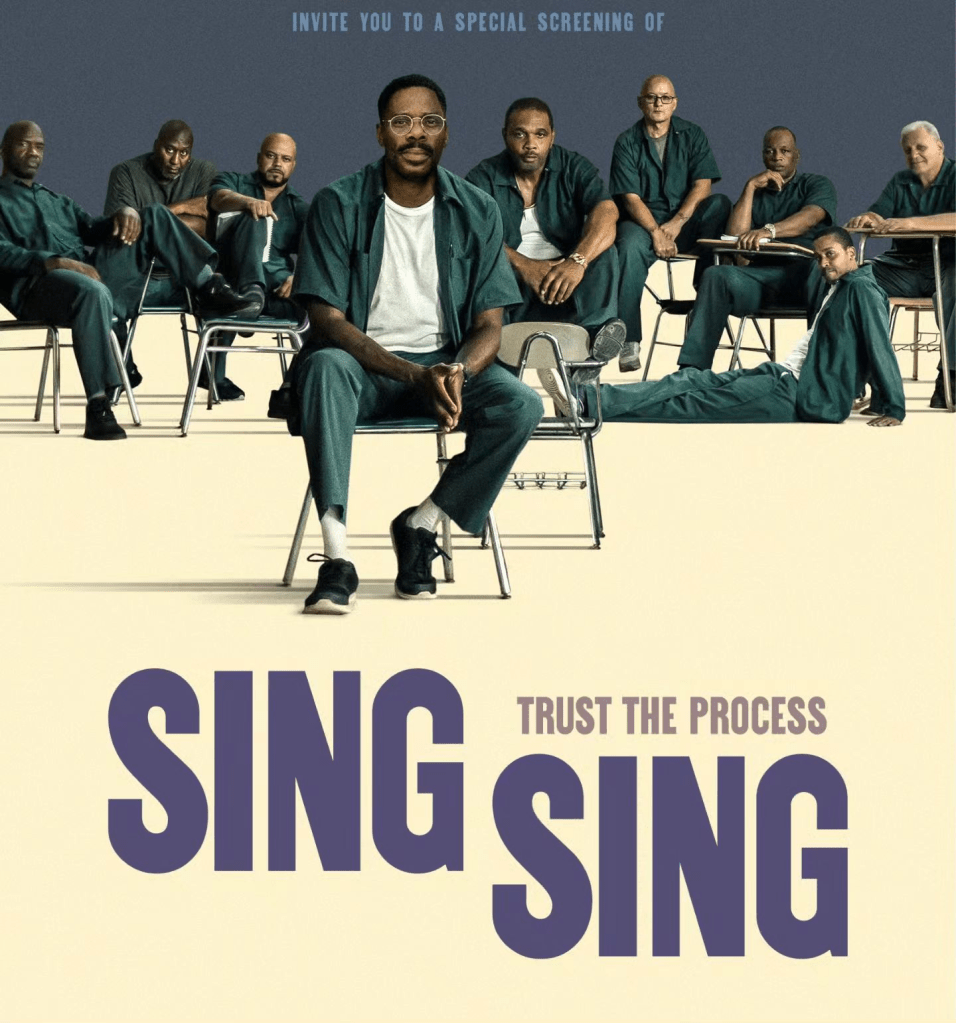
I think a lot about correctional facilities. I think about what Angela Davis said about them being places in which we deposit anyone we don’t want to see on our streets. Anyone who may tarnish the Great American image. And I think about the irony in calling it a “correctional facility,” when we stack the deck against any possibility of correcting themselves.
Crimes should be punished. But what reason is there to punish someone if they aren’t afforded the opportunity to acknowledge wrong doing?
In Ben Austin’s book about corrections and parole he paints a picture of hope and the hopeless.
Sing Sing is a snap shot. It is one small drop in the bucket towards true prison rehabilitation. And it is a unique one. It is so easy to hand someone a journal and pen, or paper and a paintbrush and tell them to emote. And that is not to say that writing or art is not an effective way to heal and grow. But theater is an art that demands more than pen or paint. In one scene you understand the difficulty and the trust it takes for one inmate to lower his defenses enough to become the character he is playing. You watch a group of men joke around and heckle each other. But you also see that they are still prisoners. You see it when the main character’s room gets tossed, or when another character reacts defensively when someone walks behind him.
They are men who have committed whatever crime they committed to end up in Sing Sing. They have families and they have lives and pursuits that were interrupted. We are given a snap shot of individuals amd not of just prisoners. More bricks in the wall.
And it is warm, and it is hopeful when they reach the finale of their play. And when the credits begin to roll, and you see hand camera footage of a stage play being performed, you are suddenly made aware of the fact that the actors in the film were all real inmates and that this was their story.
 Ma Vie en Rose